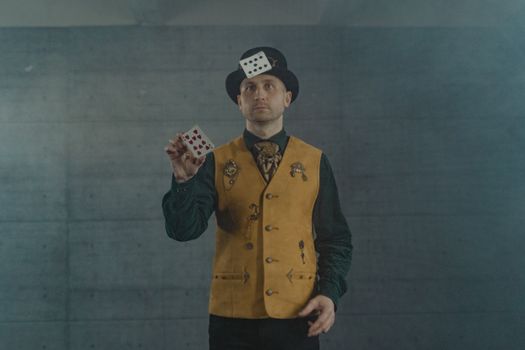
Unveiling the Mystery: How Mind Reading Tricks Work
Have you ever watched a magician seemingly pluck a thought from an audience member’s mind and wondered, “How did they do that?” Mind reading tricks, sometimes known as mentalism, have fascinated crowds for centuries. From classic vaudeville acts to viral street magic videos, the art of reading minds appears supernatural—but the secret lies not in psychic powers, but in clever techniques, psychological insight, and a deep understanding of human behavior. Let’s pull back the curtain and reveal how mind reading tricks really work.
The Origins and Evolution of Mind Reading Tricks
Mind reading tricks have their roots in the rich history of stage magic and psychic entertainment. The term “mentalism” was first popularized in the late 19th century, but the practice goes back even further.
In 1784, the famous “magnetic seer” Wolfgang von Kempelen amazed European audiences by apparently reading thoughts using a mechanical chess-playing machine. By the Victorian era, so-called “thought readers” like John Randall Brown and Stuart Cumberland were dazzling crowds with their uncanny abilities. By the early 20th century, mentalists such as Joseph Dunninger became household names, performing on radio and television for millions.
Today, mentalism spans everything from stage performances to television shows like Derren Brown’s specials, as well as viral social media videos. The techniques, however, remain rooted in psychology, suggestion, and performance skills.
The Psychological Tools Behind Mind Reading
At the heart of mind reading tricks are psychological principles that exploit the way we think, perceive, and make decisions. Here are some of the most common psychological techniques mentalists use:
1. $1 This is the art of making high-probability guesses based on body language, mannerisms, and subtle cues. For example, a mentalist might say, “I sense you’re thinking of someone whose name starts with an ‘M’,” knowing that “M” is one of the most common initials. 2. $1 Named after psychologist Bertram Forer, this refers to our tendency to accept vague, general statements as uniquely applicable to ourselves. This is why horoscopes feel accurate—and why a mentalist’s statements often seem personal. 3. $1 Mentalists can subtly “prime” an audience member with words, gestures, or images, nudging them toward a particular choice without their awareness. For example, by repeatedly tapping the number “7” during conversation, a performer can increase the likelihood the person will choose that number when asked to “think of any number between 1 and 10.” 4. $1 Some magicians are so attuned to tiny, involuntary muscle movements that they can “read” a person’s choices or thoughts as they hold their hand or walk them around a stage. 5. $1 Sometimes, mind readers use hidden microphones, confederates, or pre-show interviews to gather information about participants. This is known as “pre-show work.”Techniques and Methods: Breaking Down the Tricks
Let’s explore some classic mind reading effects and how they’re actually accomplished:
- $1 A spectator selects a word from a random book, and the mentalist reveals it. Often, the book is subtly marked, or a “force” is used to ensure the participant lands on a predetermined word. - $1 The mentalist asks someone to draw a simple image in secret, then seemingly reads their mind to reproduce the drawing. In reality, mirrors, peek devices, or sleight of hand allow the performer to glimpse the image. - $1 This method lets the mentalist secretly read a word or name written on a piece of paper before it is destroyed. The secret lies in how the paper is folded and torn, revealing a hidden section. - $1 The performer appears to reveal several pieces of information, but actually learns each one after the fact and stays “one ahead” in their revelations. - $1 This verbal technique makes spectators believe their choices are free, while the magician subtly steers them toward a predetermined outcome.Mind Reading vs. Psychic Powers: Debunking the Myths
Despite the apparent miracles on stage, mind reading is not evidence of supernatural abilities. Scientific studies confirm that there is no reliable evidence for genuine psychic mind reading. Instead, successful mind readers are skilled at exploiting cognitive biases and the limitations of human perception.
For example: - In 2012, a study in the journal “Consciousness and Cognition” found that people could be influenced to make specific choices through priming and suggestion, without being aware of it. - The classic “Zener Card” ESP experiments, popularized by J.B. Rhine in the 1930s, failed to produce statistically significant results when tightly controlled.Mind reading tricks tap into our desire to believe in the extraordinary. The real magic is in human psychology, not the paranormal.
Comparing Mind Reading Techniques: Psychological vs. Mechanical Methods
Not all mind reading tricks rely solely on psychology. Some use clever gadgets or secret assistants. Here’s a comparison of common methods:
| Technique | Main Principle | Reliance on Psychology | Reliance on Props/Gimmicks | Example Trick |
|---|---|---|---|---|
| Cold Reading | Psychological observation | High | Low | “Guessing” a participant’s background |
| Book Test (with force) | Trick book or force | Medium | High | Revealing a chosen word |
| Equivoque | Linguistic manipulation | High | Low | Forcing a card or object |
| Center Tear | Sleight of hand | Medium | Medium | Reading a destroyed note |
| Pre-show Work | Prior information gathering | Low | High | Revealing a “random” fact |
Famous Mind Readers and Their Signature Tricks
Some performers have become legends through their mastery of mind reading:
- $1 Famous for his television specials, Brown combines psychology, suggestion, and showmanship. In one famous stunt, he “predicted” the UK National Lottery numbers (using misdirection and clever editing rather than psychic powers). - $1 Known for his cerebral style, Maven has created hundreds of mentalism routines, many relying on verbal techniques and psychological subtleties. - $1 Performing for over 60 years, Kreskin is renowned for feats such as finding hidden objects using only audience guidance and suggestion. - $1 A master of psychological illusions, Banachek has consulted for TV shows and is famous for debunking psychics. He was part of Project Alpha, a 1980s experiment demonstrating that even scientists could be fooled by mentalism techniques.Why Mind Reading Tricks Captivate Us
Mind reading tricks tap into some of our deepest fascinations and fears. Why do they work so powerfully on us?
1. $1 Humans are social creatures, and the idea that someone can understand our innermost thoughts is both thrilling and unsettling. 2. $1 Mind readers often make us question whether our choices are really our own. This creates a powerful cognitive dissonance—how could they know what I would do? 3. $1 We enjoy being fooled, as long as the experience is entertaining. A 2020 survey found that 67% of magic show attendees said that “wonder and amazement” were the main reasons they enjoyed mentalism acts. 4. $1 Great mentalists frame their tricks within stories, making the experience personal and emotional.Final Thoughts on How Mind Reading Tricks Work
While mind reading tricks appear miraculous, the real secrets lie in careful preparation, acute observation, and psychological mastery. There is no need for supernatural abilities—just a deep knowledge of how people think, act, and react. Understanding these methods doesn’t diminish the wonder; if anything, it deepens our appreciation for the artistry and skill involved. Next time you see a mind reader in action, you’ll know the real magic is in the mind—yours and theirs.