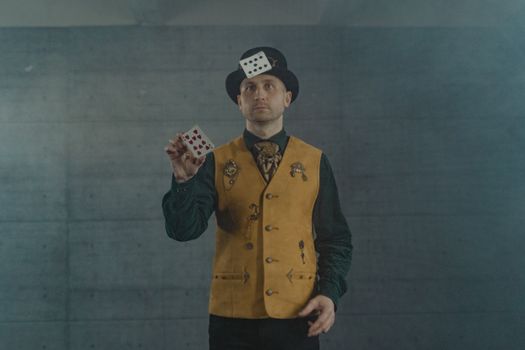
The Psychology of Illusions: How Our Minds Perceive Magic Tricks
Magic has fascinated humankind for centuries, not just as a form of entertainment but as a window into the inner workings of the human mind. While magicians dazzle us with impossible feats, the real magic often happens in our own brains. The psychology of illusions reveals how perception, attention, memory, and expectation interact to create experiences that defy logic. By examining the mechanisms behind how we perceive magic tricks, we gain insight not only into stage illusions but also into the very nature of human cognition.
The Science Behind Perception and Illusion
At the heart of every magic trick lies an illusion—a mismatch between reality and our perception. The human brain is not a passive recorder of the world; rather, it constructs reality from sensory inputs, prior knowledge, and expectations. This construction is efficient but susceptible to manipulation.
Vision is the dominant sense for most people, processing roughly 80% of all information our brains receive. The visual cortex, located at the back of the brain, interprets signals from the eyes. However, the brain often fills in gaps or overlooks inconsistencies, especially when attention is directed elsewhere. This is why magicians use misdirection so effectively: by guiding your focus, they exploit the brain’s tendency to filter out "irrelevant" details.
A classic example is the "vanishing coin" trick. While your attention is drawn to one hand, the other palm drops the coin into a lap, exploiting inattentional blindness—the failure to notice something obvious when attention is engaged elsewhere. According to a 2010 study published in the journal $1, up to 80% of participants failed to notice objects in plain sight when their focus was misdirected.
Cognitive Biases: The Brain’s Shortcuts
Cognitive biases are mental shortcuts that help us process information quickly but sometimes lead us astray. Magic tricks often exploit these biases to fool even the most skeptical observer.
One common bias is the confirmation bias—our tendency to search for, interpret, and recall information in a way that confirms our preconceptions. When watching a magician, audiences often seek evidence that supports their belief in the trick’s fairness, overlooking subtle cues that reveal the secret.
Another bias at play is change blindness—the inability to notice changes in a visual scene. In a 1999 study by Simons and Chabris, 50% of participants failed to notice a person in a gorilla suit walking through a basketball game when their attention was focused on counting passes. Magicians use similar principles to alter objects or swap props undetected.
The table below summarizes some key cognitive biases involved in magic perception:
| Bias Name | Description | Magic Trick Example |
|---|---|---|
| Inattentional Blindness | Missing visible events when attention is elsewhere | Vanishing object tricks |
| Confirmation Bias | Focusing on evidence that confirms expectations | Forcing playing cards |
| Change Blindness | Not noticing significant changes in a scene | Color-changing card tricks |
| Memory Illusions | Misremembering details after a trick | False recall of trick process |
Misdirection: Attention’s Role in Magic
Misdirection is arguably the magician’s most powerful psychological tool. By manipulating where and how an audience focuses its attention, magicians can conceal the method behind the illusion.
Attention can be described as a spotlight; only a small part of our sensory environment is illuminated at any given time. Neuroscientists estimate that humans can consciously process about 40 bits of information per second, out of the 11 million bits our senses deliver. This dramatic filtering allows magicians to sneak secret moves past even the most watchful observer.
Magicians use both overt and covert misdirection. Overt misdirection involves obvious cues—like a dramatic gesture or a sudden sound—that draw attention away from the method. Covert misdirection uses subtler psychological cues, such as eye contact or body language, to steer focus subconsciously. For example, a magician might look at their left hand while palming a coin in the right, prompting the audience to follow their gaze.
Research from the University of Nevada found that skilled magicians synchronize their movements and speech with audience eye movement patterns, increasing the likelihood of successful misdirection by 30% compared to random cues.
Memory Distortions: How We Remember Magic
Our memories are not flawless recordings; they are reconstructions prone to distortion. After witnessing a magic trick, people often misremember the sequence of events or key details—a phenomenon magicians rely on to enhance the sense of impossibility.
Studies show that the average person forgets up to 40% of new information within 20 minutes if not reinforced. When a trick unfolds rapidly or involves multiple steps, spectators are likely to fill in gaps with assumptions or false memories.
Magicians may take advantage of this by using the "time misdirection" technique—creating a delay between the secret move and the magical reveal. By the time the trick’s climax occurs, the audience’s memory of the method is hazy, increasing the sense of wonder.
A famous example is the "cups and balls" routine, which often includes extraneous moves and patter to blur the memory of when and how the balls vanished or appeared. Psychologists have observed that, when asked to recount such tricks, witnesses often omit crucial details—making the illusion seem even more baffling in hindsight.
Expectation and Surprise: The Power of Prediction
Expectation is a cornerstone of human cognition. Our brains are prediction machines, constantly anticipating what will happen next based on prior experience. When a magician subverts these expectations, the result is surprise—an emotional reaction that amplifies the effect of the trick.
This interplay between expectation and surprise is what makes magic so compelling. For instance, the "levitation" trick works because our experience tells us that objects do not float in midair. When a magician seemingly defies gravity, our predictive models break down, prompting awe and disbelief.
A 2018 survey by the Magic Circle found that 72% of audience members cited "being surprised" as the most enjoyable aspect of a magic performance. From a psychological perspective, surprise triggers the brain’s reward system, releasing dopamine and reinforcing memory—making magical moments feel more significant and memorable.
Magicians often set up expectations through verbal cues, storytelling, or repetitive patterns, only to shatter them at the crucial moment. This deliberate manipulation of prediction and outcome not only entertains but also offers a glimpse into how the brain constructs reality.
Neuroscience and the Magic of Deception
Recent advances in neuroscience provide deeper insight into the brain mechanisms underlying our susceptibility to illusions. Functional MRI (fMRI) studies have shown that watching magic activates areas of the brain involved in attention, conflict monitoring, and theory of mind—the ability to attribute thoughts and intentions to others.
For example, research from Goldsmiths, University of London, revealed heightened activity in the anterior cingulate cortex and prefrontal cortex when subjects watched magic tricks. These regions are associated with processing conflict between expectation and perception.
Additionally, the "mirror neuron system"—groups of neurons that fire both when we perform an action and when we observe others doing it—plays a role in how we mentally simulate the magician’s movements. When the observed action doesn't match our prediction (as in a sleight of hand), the brain experiences a "prediction error," leading to the sensation of wonder.
Interestingly, susceptibility to illusions varies among individuals. Studies suggest that children under age 7 are less likely to be fooled by certain types of misdirection, as their attentional networks are not yet fully developed. Conversely, adults with higher working memory capacity are sometimes even more vulnerable to complex illusions, as they attempt to track multiple possibilities and become overloaded.
What Magic Teaches Us About the Human Mind
The psychology of illusions is not just a curiosity—it offers valuable lessons about how we see, think, and remember. Magic tricks expose the brain’s shortcuts, blind spots, and biases, shedding light on the mechanisms that shape every aspect of our perception.
Understanding these principles has practical applications beyond the theater. For example, knowledge of attentional limits informs the design of safer road signs, while memory research helps legal professionals evaluate eyewitness testimony. Even in technology, magicians have inspired innovations in user interface design by revealing how people allocate attention and process visual information.
Perhaps most importantly, studying magic reminds us that our experience of reality is not always as objective or reliable as we believe. By embracing this uncertainty, we can approach the world with greater curiosity, skepticism, and appreciation for the mysteries of the mind.